Nobody warned me about the lemons.
Not the Colosseum, not the coastline, not the pasta — the lemons. They are everywhere on the Amalfi Coast, hanging from terraced groves in clusters the size of a child's fist, their skins thick and fragrant and so deeply yellow they seem to be storing sunlight. You smell them before you see them. You taste them in everything — the gelato, the pasta, the grilled fish, and most famously in the small, ice-cold glass of limoncello that appears at the end of every meal here like punctuation on a perfect sentence.
It is a good place to begin a story about the Amalfi Coast, because in many ways the lemon is this place in miniature — bright, intense, a little overwhelming, and completely unforgettable.
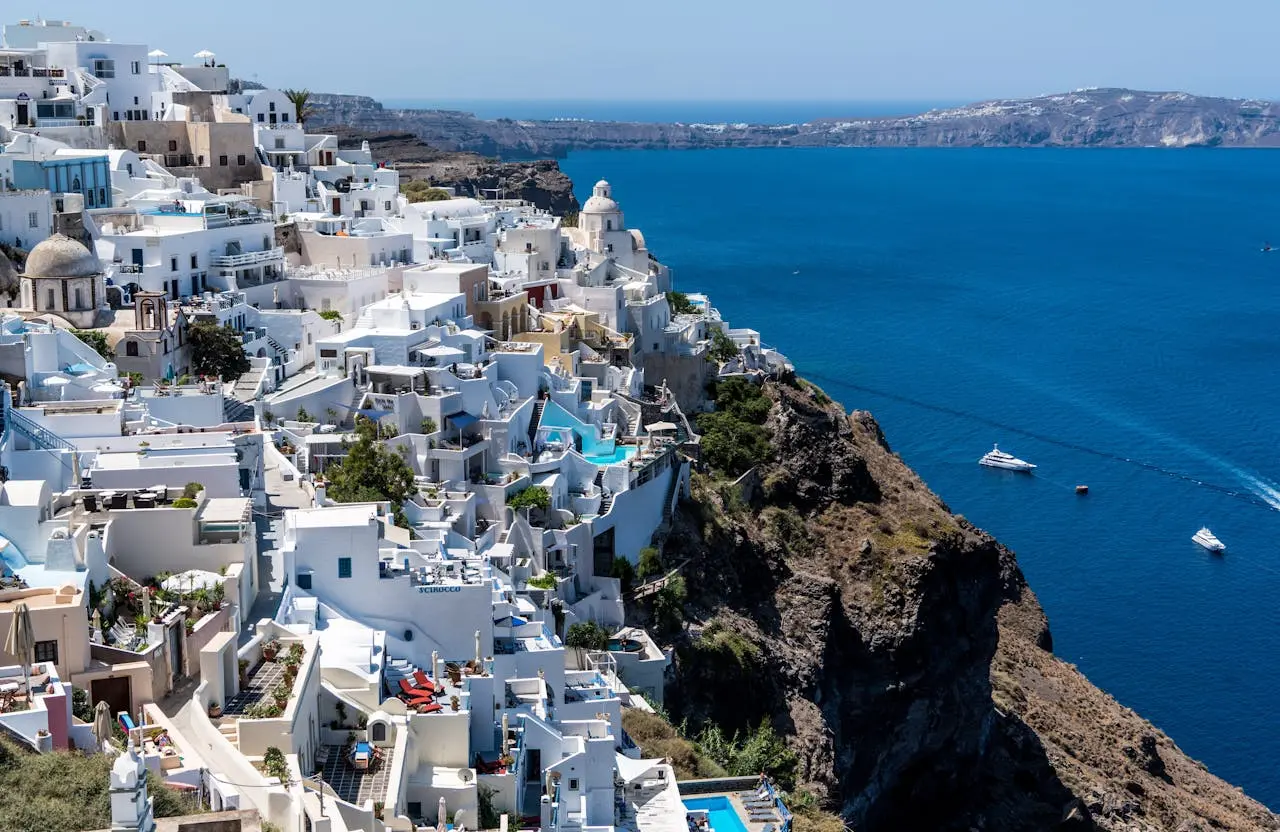
The Amalfi Coast stretches for about 50 kilometres along the southern edge of the Sorrentine Peninsula in Campania, southern Italy. On a map it looks modest. In person it is one of the most dramatic pieces of geography on earth — a wall of limestone cliffs dropping straight into the Tyrrhenian Sea, with a string of ancient fishing villages clinging to the rock face as though they grew there rather than were built.
The famous SS163 coastal road — the Nastro Azzurro, or Blue Ribbon — is the thread that connects them all. Carved into the cliff in the 1850s at the order of King Ferdinand II of the Two Sicilies, it is an engineering achievement that still feels slightly improbable when you are on it. The road twists through tunnels blasted into rock, skirts precipices with no guardrail and no apology, and rewards every terrifying curve with a view that makes you forget you were ever nervous. Buses, scooters, and tourist coaches negotiate it daily in a choreography that is equal parts chaos and grace.
Driving it yourself at dawn, before the traffic builds, with the sea going silver below you and the villages still asleep — that is one of Italy's great experiences.
The town of Amalfi is the coast's historic heart and its most visited stop. It was, in the 10th and 11th centuries, one of the most powerful maritime republics in the Mediterranean — rivalling Venice, Genoa, and Pisa in wealth and influence. Hard to believe, standing in its small piazza today, but the Cathedral of Sant'Andrea gives you a sense of that old ambition. The bronze doors were cast in Constantinople. The black-and-white striped façade rises above a wide staircase like a church that decided long ago to be a statement.
The lanes behind the cathedral are the real Amalfi — narrow, cool, and full of the kind of small discoveries that make wandering without a map the right strategy. Ceramic shops display plates and tiles painted in the coast's signature cobalt blue and sun yellow. A bakery sells sfogliatelle, the shell-shaped pastry filled with ricotta that flakes apart in the most satisfying way imaginable. An old man sits outside a doorway reading a newspaper, entirely unbothered by the parade of tourists flowing past him.
The harbour is small and busy. Wooden fishing boats bob alongside glossy tourist ferries. If you arrive by water from Salerno or Positano, which you should do at least once, the approach is the best way to understand why people have been writing about this coast for two thousand years.
Positano is the coast's most photographed village, and it earns every shot. The houses are stacked against the hillside in shades of terracotta, rose, and ochre, descending in tiers toward a small beach of dark grey volcanic sand. Getting anywhere involves stairs — the village is essentially vertical — but the climbing is rewarded constantly with views over rooftops and bougainvillea to the sea below.
The beach at Positano is lively and sociable in the way Italian beaches always are — rows of sun loungers, brightly coloured umbrellas, children shrieking into the waves, grandmothers sitting fully dressed in the shade reading paperbacks. The water is clear enough to see the bottom well out from shore. The restaurants on the seafront serve grilled branzino and spaghetti alle vongole at tables so close to the water that the spray reaches your napkin.
In the evening, when the day-trippers have left and the light turns gold and then amber and then a deep warm rose, Positano becomes something else entirely. The terraces fill with couples and families. Music drifts from somewhere up the hill. The boats in the harbour sway gently. It is the kind of evening that makes you understand, completely and without reservation, why people save for years to come to places like this.
Ravello sits high above the coast, nearly 400 metres up, and offers something the seaside towns cannot — perspective. The town is quiet, aristocratic, and slightly removed from the tourist bustle below. The Villa Cimbrone and its famous Belvedere of Infinity — a terrace lined with marble busts looking out over the sea — is one of the most beautiful viewpoints in all of Italy. Richard Wagner composed part of Parsifal here. Virginia Woolf came to write. Gore Vidal lived here for decades. It has that effect on people.
The Villa Rufolo, whose gardens inspired Wagner's vision of the Klingsor magic garden, hosts outdoor classical concerts each summer on a stage built over the cliff edge, with the sea and sky as the backdrop. Even if you are not there for the music, the gardens in bloom are worth the climb alone.
And then there is the food, which on the Amalfi Coast is not a supporting character but the whole point.
The cuisine here is simple in the way that only the most confident cooking can afford to be — perfect ingredients, left largely alone. Scialatielli ai frutti di mare, the local short pasta with mixed seafood, needs nothing beyond good olive oil, garlic, and whatever the boats brought in that morning. The mozzarella di bufala from the nearby plains of Paestum is so fresh it weeps when you cut it. The anchovy pizzas from the wood-fired ovens of the hillside villages are a lesson in how salt and heat can transform something humble into something extraordinary.
And at the end of every meal, the limoncello arrives. Made from the skins of those enormous local lemons — the sfusato amalfitano, a variety found nowhere else — it is sweet and fierce and cold and smells like the whole coast distilled into a small glass. You drink it slowly. You look out at the sea. You think about whether it is too soon to start planning the return trip.
It is not.
Plan a Trip to This Destination
Let our travel experts craft the perfect itinerary for you.
View Packages →